
Summarize this blog post with: ChatGPT | Perplexity | Claude | Grok
You’ve probably already tried home remedies or used creams to remove tanning, but the results often feel slow or inconsistent. The truth is, most people miss a few key steps that actually speed up tan removal. In this guide, you’ll learn the exact methods, ingredients, and products that work best to remove tanning from your face, hands, and body effectively.
Key Takeaways
- Skin tanning is a natural response to UV exposure that increases melanin production and darkens the skin.
- Effective tan removal involves exfoliation, hydration, and consistent sun protection.
- Natural remedies like aloe vera, yogurt, and turmeric help gently lighten tanning over time.
- Active ingredients such as Vitamin C, niacinamide, and AHAs accelerate tan fading and improve skin tone.
- Tan removal creams and soaps work by exfoliating dead skin cells and reducing pigmentation.
- Daily sunscreen use is essential to prevent new tanning and maintain results.
- Consistency in skincare routine is more important than quick fixes for long-term results.
What Is Skin Tanning and What Causes It?
Skin tanning is the process where UV exposure increases melanin production, causing the skin to darken.
First, tanning happens as your body’s natural defense mechanism against harmful ultraviolet (UV) rays. When sunlight hits your skin, melanocytes produce melanin to protect DNA from damage. source
Moreover, Indian skin tans faster because it contains higher melanin levels and more active pigment cells. For example, studies show Indian skin types (III–V) produce 40–60% more melanin when exposed to UV rays — Source: Dermatology Research, 2025
Tanning is not permanent, but it can last for weeks if not treated properly. In fact, some deep tans can take 4–8 weeks to fade naturally — Source: Formulo Dermatology, 2025
Why Is Tanning Removal Important?
Tanning removal is important because prolonged UV exposure leads to uneven skin tone, premature aging, and pigmentation issues.
First, tanning is not just cosmetic—it’s a sign of skin damage. Dermatologists confirm that UV rays can weaken the skin barrier and accelerate aging.
Moreover, tanning often leads to:
- Uneven skin tone
- Dark patches and pigmentation
- Dull and dehydrated skin
For example, research shows pigmentation issues increase significantly during Indian summers due to UV exposure and heat — Source: MoneyControl Health, 2026
Healthy skin requires both removal and prevention of tanning.
How to Remove Tanning Naturally at Home?
Natural tan removal methods involve using ingredients that exfoliate, soothe, and brighten the skin safely.
Aloe Vera for Tan Removal
First, aloe vera reduces pigmentation and soothes sun-damaged skin.
For example, applying fresh aloe gel overnight helps restore natural skin tone gradually.
Yogurt and Turmeric Pack
Second, yogurt contains lactic acid that gently exfoliates dead skin cells.
For example, mixing yogurt with turmeric creates a natural detan face pack used in Indian skincare routines.
Lemon and Honey Treatment
Third, lemon acts as a mild bleaching agent while honey hydrates the skin.
However, always dilute lemon to avoid irritation.
Natural remedies work best with consistency, not overnight results.
How to Remove Tanning from Face Quickly at Home?
Removing tanning from the face requires gentle exfoliation, hydration, and targeted brightening ingredients.
Step 1: Cleanse and Exfoliate
First, use a mild exfoliator 2–3 times a week.
For example, scrubs remove dead skin cells that hold excess melanin.
Step 2: Use Brightening Serums
Second, ingredients like Vitamin C and niacinamide reduce pigmentation.
Vitamin C, niacinamide, and AHAs are clinically proven ingredients that help fade tanning and brighten skin.
Step 3: Moisturize and Protect
Third, hydration improves skin repair and prevents further damage.
For example, using SPF 50 sunscreen daily prevents new tanning.
How to Remove Tanning from Hands and Body Effectively?
Removing tanning from hands and body requires stronger exfoliation and consistent care due to thicker skin.
Use Body Scrubs Weekly
First, physical exfoliation removes stubborn tan layers.
For example, coffee or sugar scrubs improve circulation and brighten skin.
Apply Detan Packs
Second, use multani mitti (Fuller’s earth) or clay packs for deep cleansing.
For example, these absorb impurities and lighten tanning.
Moisturize Daily
Third, body lotions with lactic acid or urea improve skin texture.
Moisturizer for Sun-Damaged Skin
Which Ingredients Are Best for Tan Removal?
The best tan removal ingredients work by reducing melanin production and exfoliating pigmented cells.
|
Ingredient |
Benefit |
Best For |
|---|---|---|
|
Vitamin C |
Brightens skin, reduces tan |
Face & neck |
|
Niacinamide |
Controls pigmentation |
Acne-prone skin |
|
AHAs (Glycolic) |
Exfoliates dead skin cells |
Deep tan removal |
|
Kojic Acid |
Reduces melanin production |
Stubborn tan |
|
Alpha Arbutin |
Lightens dark spots |
Uneven skin tone |
Tan removal involves exfoliating dead skin cells and reducing excess melanin to restore natural skin tone.
Do Tan Removal Creams Really Work?
Tan removal creams work by combining exfoliating acids and brightening agents to gradually lighten the skin.
First, creams with kojic acid and glycolic acid target pigmentation directly.
For example, regular use can visibly reduce tanning within 2–4 weeks.
Moreover, dermatologists recommend consistent application for best results.
Tan removal soaps and creams work by combining exfoliation and brightening agents to gradually improve skin tone.
Are Tan Removal Soaps Effective for Daily Use?
Tan removal soaps are effective for mild tanning and daily maintenance but not for deep pigmentation.
First, these soaps help remove dirt, oil, and dead skin cells.
For example, soaps with exfoliating particles provide gentle daily detan effects.
However, they work slowly compared to serums or creams.
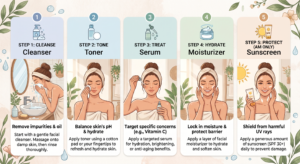
What Is the Best Skincare Routine for Removing Tan?
The best tan removal routine combines cleansing, exfoliation, treatment, and sun protection.
Daily Routine
- Cleanser
- Vitamin C serum
- Moisturizer
- Sunscreen
Weekly Routine
- Exfoliation (2–3 times)
- Face pack or mask
For example, following this routine consistently can reduce tanning significantly within 3–4 weeks.
Can Tanning Be Removed Permanently?
Tanning cannot be permanently removed because it is a natural response to UV exposure.
First, even after removing a tan, new exposure will trigger melanin production again.
Moreover, experts confirm UVA rays penetrate deep and cause persistent tanning throughout the day — Source: NDTV Health, 2026
Prevention is the only long-term solution.
How to Prevent Tanning in the Future?
Preventing tanning requires consistent sun protection and barrier methods.
Use Sunscreen Daily
First, SPF 50 with PA+++ or higher is essential.
Avoid Peak Sun Hours
Second, limit exposure between 10 AM–4 PM.
Wear Protective Clothing
Third, hats, sunglasses, and full sleeves reduce UV exposure.
For example, Indian skin is exposed to high UV levels year-round, increasing tanning risk — Source: Science Insights, 2026
Tools and Products for Tan Removal (Practical Guide)
Tan removal tools include creams, soaps, and serums that enhance exfoliation and skin brightening.
Recommended Product Types
- Tan removal creams (kojic acid, glycolic acid)
- Tan removal soaps (daily maintenance)
- Vitamin C serums
What’s Next: Your 7-Day Tan Removal Plan
A structured tan removal plan helps you achieve visible results faster and maintain consistency.
Day 1–3
- Start exfoliation + Vitamin C
Day 4–5
- Add face pack + hydration
Day 6–7
- Focus on sunscreen and maintenance
By following a routine, you can visibly reduce tanning within one week.
Conclusion
Removing tanning is a gradual process that requires consistency, the right ingredients, and proper sun protection.
First, focus on exfoliation and hydration.
Second, use proven ingredients like Vitamin C and niacinamide.
Finally, protect your skin daily to prevent future tanning.
Healthy, glowing skin is not about quick fixes—it’s about smart, consistent care.
Frequently Asked Questions (FAQs)
1. How long does it take to remove tanning naturally?
Tan removal usually takes 2–4 weeks with consistent care.
First, a natural tan fades as your skin sheds dead cells and regenerates new ones. For example, most tans start fading within a few weeks and may take up to a month to fully disappear depending on skin type — Source: Medical news today
2. Can tanning be removed permanently?
Tanning cannot be permanently removed because it is a natural skin response to UV exposure.
Moreover, your skin will produce melanin again whenever it is exposed to sunlight. For example, even after removing a tan, new sun exposure can cause re-tanning within days — Source: Healthline
3. What is the fastest way to remove tanning?
The fastest way to remove tanning is by combining exfoliation, brightening ingredients, and sunscreen.
First, exfoliation removes dead skin cells, while ingredients like Vitamin C and glycolic acid speed up skin renewal. For example, consistent use of these methods can visibly reduce tan within 1–2 weeks.
4. Do tan removal creams and soaps really work?
Tan removal creams and soaps help fade tanning gradually but do not provide instant results.
Moreover, they work by exfoliating and reducing melanin production over time. For example, creams with kojic acid or AHAs can improve skin tone with regular use.
5. What should you avoid when trying to remove tanning?
You should avoid harsh or unproven remedies that can damage the skin.
First, undiluted lemon juice can irritate the skin and even cause burns when exposed to sunlight. For example, dermatology sources warn that such methods may worsen pigmentation instead of reducing it — Source: Healthline
Written by Sunny Kushwaha founder of PaperHosp, researching and writing health content using trusted sources including WHO publications, government health portals, and hospital/medical institution websites.
Disclaimer: This article was initially drafted using AI assistance. However, the content has undergone thorough revisions, editing, and fact-checking by human editors and subject matter experts to ensure accuracy.
The discussion in “How to Remove Tanning: Clear, Even Skin Fast – PaperHosp” is clear and useful. The supporting details make the main points much easier to understand.