
Summarize this blog post with: ChatGPT | Perplexity | Claude | Grok
You’ve probably seen teeth whitening strips everywhere—from pharmacies to online ads promising a brighter smile in days. But what most people don’t realize is that not all strips work the same—or safely. In this guide, you’ll learn exactly how teeth whitening strips work, whether they’re worth it, and how to use them for the best results.
Key Takeaways
- Teeth whitening strips are thin plastic strips coated with peroxide-based gel that remove stains and lighten tooth color.
- Whitening strips can improve tooth shade by one to two levels within a few days to weeks when used correctly.
- Peroxide ingredients penetrate enamel and break down stain-causing molecules inside teeth.
- Whitening strips are affordable and convenient but less powerful than professional dental treatments.
- Common side effects include temporary tooth sensitivity and mild gum irritation.
- Proper usage and following instructions are essential to avoid enamel damage or uneven results.
- Maintaining oral hygiene and reducing staining foods helps prolong whitening results.
What Are Teeth Whitening Strips?
Teeth whitening strips are thin plastic strips coated with peroxide-based gel that lighten teeth by breaking down stain molecules.
First, these strips are designed to stick directly onto your teeth and deliver a whitening agent like hydrogen peroxide. For example, most over-the-counter strips use carbamide peroxide, which breaks down into hydrogen peroxide to bleach stains.
Second, teeth whitening strips work by allowing hydrogen peroxide or carbamide peroxide to penetrate enamel and bleach discoloration. This process targets both surface stains and deeper discoloration inside the tooth.
Why Are Teeth Whitening Strips Important?
Teeth whitening strips are important because they provide an affordable and convenient way to improve smile appearance without professional dental visits.
First, they offer a budget-friendly alternative to clinic treatments. For example, professional whitening can cost ₹10,000–₹30,000 in India, while strips are significantly cheaper.
Second, they boost confidence and appearance. Studies show that smiling improves perceived attractiveness and confidence — Source: American Academy of Cosmetic Dentistry, 2023.
Third, they are convenient for busy lifestyles. You can apply them at home without scheduling dental appointments.
What Are the Types of Teeth Whitening Strips?
Types of teeth whitening strips include peroxide-based, peroxide-free, and sensitive formulas designed for different needs.
Peroxide-Based Whitening Strips
First, these strips use hydrogen or carbamide peroxide for effective whitening. For example, they can lighten teeth by 1–2 shades within days — Source: Healthline, 2021
Peroxide-Free Whitening Strips
Second, peroxide-free strips use natural ingredients like coconut oil or lemon extracts. For example, they are suitable for people who experience sensitivity.
Whitening Strips for Sensitive Teeth
Third, sensitive formulas contain lower peroxide levels or added soothing agents. For example, potassium nitrate helps reduce nerve irritation during treatment.
How to Use Teeth Whitening Strips Correctly for Best Results?
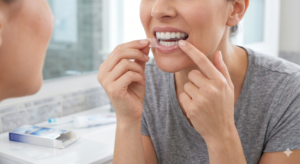
Using teeth whitening strips correctly involves applying them to clean teeth for a specific duration consistently over several days.
Step-by-Step Process
- First, brush and dry your teeth before application
- Second, apply the strip evenly across your teeth
- Third, leave it on for 20–30 minutes
- Fourth, remove and rinse your mouth
For example, most brands recommend using strips twice daily for 14 days.
Common Mistakes to Avoid
- Leaving strips on too long
- Overlapping onto gums
- Using more frequently than recommended
Do Teeth Whitening Strips Actually Work for Yellow Teeth?
Teeth whitening strips work effectively for mild to moderate stains but may not produce dramatic results for severe discoloration.
First, most whitening strips can improve tooth color by one to two shades within a few days to weeks when used as directed. Source
Second, they work best on extrinsic stains caused by coffee, tea, or smoking. For example, yellow stains respond better than gray discoloration.
Third, they are less effective than professional treatments. At-home whitening strips are less powerful than professional dental treatments but offer a more affordable and convenient option. Source
What Are the Side Effects of Teeth Whitening Strips?
Teeth whitening strips are generally safe but may cause temporary tooth sensitivity and gum irritation.
First, sensitivity is the most common side effect. Clinical data shows around 10% of users report sensitivity during long-term use — Source: PubMed Clinical Study, 2008
Second, gum irritation may occur if strips touch soft tissue. For example, improper placement can cause mild redness.
Third, overuse can damage enamel. Studies indicate high peroxide concentrations may weaken enamel structure over time — Source: Journal of Dentistry
Whitening Strips vs Professional Teeth Whitening: What’s the Difference?
Whitening strips differ from professional treatments in strength, speed, and customization.
|
Feature |
Whitening Strips |
Professional Whitening |
|---|---|---|
|
Cost |
Low |
High |
|
Results |
Gradual |
Immediate |
|
Strength |
Mild peroxide |
Strong bleaching agents |
|
Supervision |
None |
Dentist-supervised |
First, professional treatments provide faster results. For example, in-office whitening can brighten teeth in a single session.
Second, strips are more convenient but less powerful.
Which Are the Best Teeth Whitening Strips for Sensitive Teeth?
The best whitening strips for sensitive teeth are those with low peroxide levels or added desensitizing ingredients.
First, look for products labeled “sensitive” or “gentle whitening.” For example, these contain lower peroxide concentrations.
Second, choose strips with potassium nitrate or fluoride. These ingredients help protect enamel and reduce discomfort.
Third, avoid cheap or unverified products. Reports show up to 88% of imported whitening kits may be unsafe — Source: Trading Standards Report, 2024
How to Maintain White Teeth After Using Whitening Strips?
Maintaining white teeth involves good oral hygiene and avoiding staining foods and habits.
First, reduce intake of coffee, tea, and red wine. For example, these beverages cause surface staining.
Second, brush twice daily and floss regularly. This prevents plaque buildup and discoloration.
Third, use whitening toothpaste occasionally for maintenance.
Fourth, avoid smoking. Tobacco stains teeth deeply over time.
Tools and Practical Tips for Better Results
Effective teeth whitening requires combining strips with proper oral care tools and habits.
First, use a soft-bristle toothbrush and fluoride toothpaste.
Second, consider electric toothbrushes for better cleaning efficiency.
Third, combine whitening strips with dental flossing.
What’s Next: How to Choose the Right Whitening Strips?
Choosing the right whitening strips involves considering sensitivity, ingredients, and expected results.
First, check for ADA-approved products for safety.
Second, choose based on your sensitivity level.
Third, consult a dentist if you have severe discoloration.
Conclusion
Teeth whitening strips are a simple and effective way to brighten your smile at home when used correctly.
In summary, they offer convenience, affordability, and visible results for mild stains. However, they require proper use and realistic expectations.
Ultimately, by following the right techniques and maintaining oral hygiene, you can achieve a confident, brighter smile safely.
Frequently Asked Questions (FAQs) About Teeth Whitening Strips
1. Do teeth whitening strips really work?
Teeth whitening strips do work for mild to moderate stains and can lighten teeth by 1–2 shades over time.
First, they are effective because they use peroxide-based ingredients to break down stain molecules. For example, they work best on stains caused by coffee, tea, or smoking rather than deep intrinsic discoloration. source
2. How long does it take to see results from whitening strips?
Most people see visible results within 7–14 days of consistent use.
Second, some advanced formulas may show improvement in as little as 3–5 days, but full results typically require completing the entire treatment cycle. source
3. How often should you use teeth whitening strips?
Teeth whitening strips are typically used once daily for 7–14 days, depending on the product.
First, some people with sensitive teeth may use them every other day to reduce irritation. Second, overuse does not speed results and may increase side effects. source
4. Are teeth whitening strips safe for daily use?
Teeth whitening strips are generally safe when used as directed but can cause side effects if overused.
For example, using them longer than recommended may lead to enamel damage or gum irritation. Dentists often recommend choosing products with approved safety standards.
5. What are the side effects of teeth whitening strips?
The most common side effects include tooth sensitivity and mild gum irritation.
First, sensitivity happens because peroxide temporarily affects the tooth’s inner layers. Second, gum irritation may occur if the strip touches soft tissue.
6. Can teeth whitening strips damage enamel?
Teeth whitening strips can damage enamel if used excessively or incorrectly.
However, when used according to instructions, they are considered safe for most people. Overuse increases the risk of enamel weakening and uneven whitening.
7. Do whitening strips work on all types of teeth stains?
Whitening strips work best on surface (extrinsic) stains but are less effective on deep intrinsic stains.
For example, stains from food, drinks, and smoking respond well, while discoloration from medication or injury may require professional treatment.
8. Can I eat or drink after using whitening strips?
You can eat after using whitening strips, but it’s best to avoid staining foods for 24–48 hours.
For example, coffee, tea, and colored foods can quickly reverse whitening results if consumed immediately after treatment.
9. Should I brush my teeth before or after using whitening strips?
You should brush your teeth before applying whitening strips but wait before brushing afterward.
First, brushing before ensures better adhesion. Second, waiting 30 minutes after use helps reduce sensitivity and protects enamel.
10. How long do whitening strip results last?
Whitening strip results can last from a few months up to six months with proper care.
For example, avoiding staining foods and maintaining oral hygiene can extend results significantly. source
Written by Sunny Kushwaha founder of PaperHosp, researching and writing health content using trusted sources including WHO publications, government health portals, and hospital/medical institution websites
Disclaimer: This article was initially drafted using AI assistance. However, the content has undergone thorough revisions, editing, and fact-checking by human editors and subject matter experts to ensure accuracy.