
Summarize this blog post with: ChatGPT | Perplexity | Claude | Grok
You probably already wash your face and apply some cream in the morning. But if you’re not following the right order or using the right products, you might be missing out on real results. In this guide, you’ll learn the exact dermatologist-approved morning skin care routine for clear, glowing skin.
Key Takeaways
- A morning skin care routine is a daily process designed to cleanse, protect, and prepare the skin for environmental exposure.
- Basic routines typically include cleanser, moisturizer, and sunscreen as essential steps.
- Sunscreen with SPF 30 or higher is the most important step for preventing premature aging and skin damage.
- Skincare products should be applied from lightest to heaviest for better absorption.
- Consistency in a simple routine is more effective than using too many products inconsistently.
- Different skin types require customized products, not different core steps.
- Antioxidant serums like Vitamin C help protect skin from pollution and UV damage.
What Is a Morning Skin Care Routine?
A morning skin care routine is a daily regimen designed to cleanse, protect, and prepare the skin for environmental exposure.
First, this routine focuses on protection rather than repair. Unlike nighttime routines, your morning skincare is all about shielding your skin from UV rays, pollution, and dirt.
For example, when you step outside in India’s high UV index conditions, your skin is exposed to intense sunlight, dust, and humidity. A proper routine acts like a protective barrier.
Moreover, research shows that 74% of people follow both morning and evening skincare routines, highlighting its importance — Source: Drive Research, 2023
A basic morning skincare routine includes cleansing, moisturizing, and applying sunscreen with SPF 30 or higher.
Why Is a Morning Skin Care Routine Important for Your Skin?
A morning skin care routine is important because it protects your skin from UV damage, pollution, and premature aging.
First, UV exposure is the biggest cause of skin aging. Studies show that up to 80% of visible skin aging is caused by sun exposure — Source: The Healthcare Diary, 2025
For example, skipping sunscreen daily can lead to wrinkles, dark spots, and uneven skin tone within a few years.
Moreover, dermatologists confirm that daily sunscreen use helps prevent sunburn, skin cancer, and premature aging — Source: Johns Hopkins Medicine
Sunscreen is the most important step in a morning skincare routine because it protects against UV damage and premature aging.
In addition, many people still skip sunscreen. A survey found that only 56% of people use sunscreen regularly, even though most worry about aging — Source: American Academy of Dermatology, 2025
How to remove tanning naturally.
What Is the Correct Morning Skin Care Routine Order?
The correct morning skin care routine order is applying products from lightest to heaviest, ending with sunscreen.
First, product layering matters because lighter formulas absorb better, while heavier products seal hydration.
For example, applying moisturizer before serum can block absorption and reduce effectiveness.
Applying skincare products from lightest to heaviest improves absorption and effectiveness.
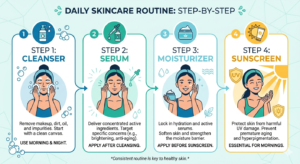
Step-by-Step Morning Skincare Routine
Step 1: Cleanser (or Water Rinse)
Cleansing removes oil, sweat, and bacteria accumulated overnight.
First, if you have oily skin, use a gentle cleanser. If your skin is dry, rinsing with water may be enough.
For example, gel cleansers work best for oily skin, while cream cleansers suit dry skin.
Step 2: Toner (Optional)
Toner is a lightweight liquid that balances skin pH and adds hydration.
Second, toners are optional but helpful for hydration and soothing.
For example, rose water toners can calm sensitive skin and reduce redness.
Step 3: Serum (Vitamin C / Niacinamide)
Serums are concentrated treatments that target specific skin concerns.
Third, Vitamin C serum is ideal for morning use because it protects against pollution and boosts glow.
For example, using a 10–20% Vitamin C serum can reduce dullness and pigmentation.
Step 4: Moisturizer
Moisturizer hydrates the skin and strengthens the skin barrier.
Next, even oily skin needs hydration to prevent excess oil production.
For example, lightweight gel moisturizers work well in humid climates like India.
Step 5: Sunscreen (SPF 30+)
Sunscreen is the final step that protects your skin from harmful UV rays.
Finally, always apply sunscreen as the last step before makeup.
For example, even indoors, UVA rays can penetrate windows and damage your skin source
- Use SPF 30 or higher
- Apply every morning
- Reapply every 2 hours
How Does a Morning Skin Care Routine Differ by Skin Type?
A morning skin care routine differs by skin type mainly in product selection, not in core steps.
First, the steps remain the same for everyone. However, the products change depending on your skin needs.
Skin Type Routine Comparison
|
Skin Type |
Cleanser |
Serum |
Moisturizer |
Sunscreen |
|---|---|---|---|---|
|
Oily Skin |
Gel-based |
Niacinamide |
Oil-free gel |
Matte SPF |
|
Dry Skin |
Cream cleanser |
Hyaluronic acid |
Rich cream |
Hydrating SPF |
|
Acne-Prone |
Salicylic acid |
Niacinamide |
Lightweight |
Non-comedogenic SPF |
|
Sensitive |
Gentle cleanser |
Minimal actives |
Barrier cream |
Mineral SPF |
For example, oily skin benefits from oil-free products, while dry skin needs heavier hydration.
Best moisturizer for dry skin in summer.
Which Products Should You Use in the Morning for Glowing Skin?
The best morning skincare products include cleanser, antioxidant serum, moisturizer, and sunscreen.
First, antioxidant ingredients like Vitamin C protect against free radical damage.
For example, Vitamin C neutralizes pollution effects and brightens dull skin.
Second, hydrating ingredients like hyaluronic acid help retain moisture.
Third, SPF products prevent pigmentation and aging.
Using fewer high-quality products is more effective than using many unnecessary ones.
What Are the Most Common Morning Skincare Mistakes to Avoid?
Common morning skincare mistakes include skipping sunscreen, using the wrong order, and overusing products.
First, skipping SPF is the biggest mistake. Studies show that 80% of UV rays can penetrate clouds, meaning sun damage occurs even on cloudy days — Source: The Healthcare Diary, 2025
Second, using harsh cleansers can damage your skin barrier.
Third, over-layering products can cause breakouts and irritation.
For example, using too many serums at once can clog pores instead of improving skin.
Tools & Practical Applications for Building Your Routine
Building a morning skincare routine involves choosing the right products and applying them consistently.
First, you can start with basic tools like:
- Cleanser
- Serum
- Moisturizer
- Sunscreen
For example, apps and dermatology guides can help track your routine and product effectiveness.
Additionally, you can use:
- Dermatologist consultations
- Skin analysis apps
- Ingredient checkers
These tools help you customize your routine effectively.
What Should You Do Next After Building a Morning Routine?
After building a morning routine, the next step is to create a consistent AM + PM skincare system.
First, morning routines focus on protection, while night routines focus on repair.
For example, you can use retinol at night but not in the morning.
Second, consistency matters more than complexity.
Consistency in a simple skincare routine is more effective than using multiple products inconsistently.
Conclusion
A morning skin care routine is the foundation of healthy, glowing skin.
In summary, you don’t need a complicated 10-step routine. You just need the right steps, the right products, and consistency.
By following a simple routine—cleanser, serum, moisturizer, and sunscreen—you can protect your skin and see real results over time.
Start today, stay consistent, and your future skin will thank you.
FAQs — Morning Skin Care Routine
1. What is the correct order of a morning skin care routine?
The correct morning skin care routine order is cleanser → toner → serum → moisturizer → sunscreen.
First, this order follows the principle of applying products from lightest to heaviest so they absorb properly.
For example, applying sunscreen last ensures it forms a protective barrier against UV rays. source
2. Is sunscreen necessary every day in a morning routine?
Yes, sunscreen is necessary every day because it protects your skin from UV damage and premature aging.
First, UV rays can damage your skin even on cloudy days or indoors through windows.
For example, daily SPF use prevents dark spots, wrinkles, and long-term skin damage. source
3. Can I skip cleansing in the morning?
Yes, you can skip cleansing in the morning if you have dry or sensitive skin and your face is not oily.
First, dermatologists suggest that gentle rinsing may be enough if your skin is clean from the night routine.
For example, oily skin types should still use a cleanser to remove excess oil buildup. source
4. How long does it take to see results from a skincare routine?
Most people see visible results from a skincare routine within 2–4 weeks with consistent use.
First, basic improvements like hydration and glow appear quickly, while deeper concerns take longer.
For example, issues like pigmentation or fine lines may take 8–12 weeks to improve.
5. Do I need a different skincare routine for morning and night?
Yes, morning and night skincare routines serve different purposes—protection vs. repair. source
First, morning routines focus on sunscreen and antioxidants to protect the skin.
For example, nighttime routines include ingredients like retinol that repair and renew the skin while you sleep.
Written by Sunny Kushwaha founder of PaperHosp, researching and writing health content using trusted sources including WHO publications, government health portals, and hospital/medical institution websites.
Disclaimer: This article was initially drafted using AI assistance. However, the content has undergone thorough revisions, editing, and fact-checking by human editors and subject matter experts to ensure accuracy.
Your positivity and optimism are contagious It’s impossible to read your blog without feeling uplifted and inspired Keep up the amazing work