
Summarize this blog post with: ChatGPT | Perplexity | Claude | Grok
You may already know that flat feet can cause foot pain, poor posture, or discomfort while walking and running. But many people focus only on supportive shoes and ignore the muscle weakness and mobility limitations that contribute to fallen arches. In this guide, you’ll learn the best flat foot exercises, how they work, and how to build a simple routine that strengthens your feet naturally.
Key Takeaways
- Flat feet occur when the arches collapse and the soles of the feet touch the ground more completely than normal.
- Flat foot exercises strengthen the muscles that support the arch, ankle, and lower leg to improve stability and reduce pain.
- Short foot exercises, calf raises, towel curls, and toe exercises are among the most recommended movements for strengthening fallen arches.
- Consistent foot strengthening may improve balance, posture, walking mechanics, and athletic performance over time.
- Tight calves, weak hips, and overpronation can contribute to flat foot discomfort and lower-body alignment issues.
- Supportive shoes and orthotics can reduce strain on flat feet, but exercises help build long-term muscle support.
- Daily mobility and strengthening routines often produce noticeable improvements within 4–6 weeks when performed consistently.
What Are Flat Feet and Why Do They Happen?
Flat feet, also called pes planus, occur when the arches of the feet collapse and the entire sole touches the ground more than normal. This condition can affect one foot or both feet and may develop during childhood or adulthood.
First, flat feet are usually classified into two main types:
|
Type of Flat Foot |
Description |
Common Cause |
|---|---|---|
|
Flexible Flat Feet |
Arch appears when sitting but disappears while standing |
Weak muscles, ligament laxity |
|
Rigid Flat Feet |
Arch remains absent even when sitting |
Bone abnormalities or arthritis |
Moreover, flexible flat feet are far more common than rigid flat feet. Research suggests that flexible flatfoot affects approximately 13.6%–26.6% of adults. — Source: Scientific Reports, 2024
For example, runners, people who stand for long hours, overweight individuals, and those with poor ankle stability often experience fallen arches over time.
In addition, several factors may contribute to flat feet:
- Weak foot muscles
- Tight calf muscles
- Obesity
- Genetics
- Posterior tibial tendon dysfunction
- Poor footwear habits
- Injuries or arthritis
Flat foot exercises involve strengthening the muscles that support the arch, ankle, and lower leg to improve stability and reduce pain. These exercises target the intrinsic muscles of the foot and improve how the foot absorbs force during movement.
What Causes Back Pain in Females.
Why Do Flat Feet Matter?
Flat feet matter because they can affect posture, walking mechanics, balance, and joint alignment throughout the body. The feet act as the foundation of movement, so collapsed arches can create stress that travels upward into the ankles, knees, hips, and lower back.
Furthermore, overpronation is one of the biggest problems associated with flat feet. Overpronation occurs when the ankles roll inward excessively during walking or running.
For example, many people with flat feet develop:
- Knee pain
- Shin splints
- Plantar fasciitis
- Achilles tendon tightness
- Hip discomfort
- Lower back pain
A recent study found that patients with lower back pain were 3.54 times more likely to have flat feet compared to people without back pain. — Source: medRxiv, 2025
At the same time, athletes with fallen arches may experience reduced balance and higher injury risk. Research also shows that individuals with flat feet often demonstrate lower balance scores during standing and movement activities. — Source: Scientific Reports, 2024
Can Flat Foot Exercises Really Improve Fallen Arches?
Flat foot exercises can improve foot strength, posture, and movement mechanics, especially in people with flexible flat feet. However, exercises may not completely change bone structure in severe or rigid cases.
Importantly, strengthening exercises work best when the condition is caused by muscle weakness or poor movement patterns instead of structural deformities.
For example, short foot exercises specifically activate the intrinsic muscles that support the medial arch. Studies show these exercises can improve arch height, balance, and hindfoot posture after several weeks of consistent training. — Source: Journal of the American Podiatric Medical Association, 2026
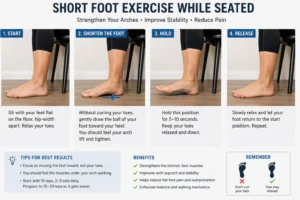
Short foot exercises are designed to activate the intrinsic muscles of the foot that help support the medial arch.
Additionally, researchers found that 4–6 weeks of intrinsic foot muscle strengthening can produce measurable improvements in adults with flexible flat feet. — Source: JAPMA, 2026
That being said, exercises usually work best when combined with:
- Supportive footwear
- Mobility work
- Weight management
- Proper walking mechanics
- Gradual strengthening progression
Morning Skin Care Routine: The Ultimate Guide for Glowing, Healthy Skin
What Are the Best Exercises for Flat Feet?
The best flat foot exercises strengthen the arches, ankles, calves, and hips while improving overall foot control. Most people benefit from combining strengthening and stretching exercises into a daily routine.
How Does the Short Foot Exercise Strengthen the Arch?
The short foot exercise strengthens the small muscles inside the foot that stabilize the arch during standing and walking.
First, sit barefoot with your feet flat on the floor. Then gently pull the ball of the foot toward the heel without curling your toes.
Steps:
- Keep your toes relaxed
- Lift the arch slightly
- Hold for 5 seconds
- Repeat 10–15 times per foot
For example, beginners often struggle to isolate the arch muscles initially. Performing the movement slowly improves neuromuscular control.
Why Are Towel Curls Effective for Fallen Arches?
Towel curls strengthen the toe flexors and intrinsic foot muscles that support the arch.
First, place a towel on the floor and use your toes to scrunch it toward you.
Benefits:
- Improves foot grip strength
- Activates arch-supporting muscles
- Enhances toe coordination
Moreover, adding a lightweight object on the towel increases resistance as strength improves.
How Do Calf Raises Help Flat Feet?
Calf raises strengthen the calves, ankles, and posterior chain muscles that stabilize the foot during movement.
First, stand with your feet hip-width apart. Then slowly raise your heels off the ground and lower them with control.
Recommended Routine:
- 3 sets of 12–15 repetitions
- Perform slowly
- Focus on balanced foot pressure
For example, single-leg calf raises provide additional ankle stability training for runners and athletes.
Why Are Toe Spreads Useful for Flat Feet?
Toe spread exercises improve toe mobility and strengthen the muscles that help maintain proper foot alignment.
First, spread your toes apart as wide as possible while keeping the foot flat on the ground.
This movement may seem simple, but it improves foot control and reduces stiffness caused by narrow footwear.
Which Stretches Help Relieve Flat Foot Pain?
Flat foot stretches reduce tightness in the calves, Achilles tendon, and plantar fascia that may worsen overpronation and arch collapse.
Importantly, tight calf muscles limit ankle mobility and increase stress on the foot during walking.
How Does the Calf Stretch Improve Flat Feet?
Calf stretches improve ankle flexibility and reduce tension that pulls the foot into excessive pronation.
Wall Calf Stretch:
- Stand facing a wall
- Place one leg behind you
- Keep the heel flat
- Lean forward gently
- Hold for 30 seconds
Repeat 2–3 times per side.
Research suggests that tight calf muscles contribute to overpronation and flat foot discomfort. source
Why Is Plantar Fascia Stretching Important?
Plantar fascia stretching reduces tension under the foot and may relieve heel pain associated with flat feet.
For example, rolling a tennis ball under the foot for 1–2 minutes can loosen tight tissue and improve circulation.
People with flat feet are also more likely to develop plantar fasciitis due to excessive strain on the foot. source
How Often Should You Do Flat Foot Exercises?
Most people should perform flat foot exercises 4–6 times per week for consistent improvement. Short daily sessions are usually more effective than occasional intense workouts.
A simple beginner routine may include:
|
Exercise |
Sets |
Reps |
|---|---|---|
|
Short Foot Exercise |
3 |
10–15 |
|
Towel Curls |
3 |
15 |
|
Calf Raises |
3 |
12–15 |
|
Toe Spreads |
3 |
10 |
|
Calf Stretch |
2 |
30 seconds |
Moreover, consistency matters more than intensity during the first few weeks.
For example, many people notice improved foot awareness and reduced fatigue within one month of regular training.
Are Orthotics Necessary If You Exercise Regularly?
Orthotics are supportive inserts that help distribute pressure and improve foot alignment, but they do not replace muscle strengthening entirely.
Importantly, orthotics can reduce pain and improve comfort during walking or running. However, exercises help strengthen the muscles responsible for long-term stability.
Supportive footwear and orthotics can reduce strain on flat feet, but exercises are often recommended to improve long-term foot strength.
Research also suggests that footwear choices may influence flat foot prevalence and posture. — Source: Journal of Bone and Joint Surgery, 1995
What Shoes Are Best for People With Flat Feet?
Shoes for flat feet should provide arch support, heel stability, and shock absorption.
Look for:
- Firm heel counters
- Supportive midsoles
- Wide toe boxes
- Motion-control features
Avoid:
- Completely flat shoes
- Unsupportive sandals
- Worn-out running shoes
What Mistakes Should You Avoid While Doing Flat Foot Exercises?
Common flat foot exercise mistakes include inconsistency, poor form, and progressing too quickly.
First, many people try advanced barefoot training before building sufficient foot strength. This often increases pain instead of improving function.
Second, ignoring hip and ankle strength limits long-term progress. Flat feet rarely involve only the arches.
Third, wearing unsupportive shoes during recovery can slow improvement.
For example, people who suddenly switch to minimalist footwear without strengthening their feet often develop calf tightness or plantar fascia irritation.
When Should You See a Doctor for Flat Feet?
You should see a doctor or physical therapist if flat feet cause persistent pain, swelling, numbness, or difficulty walking.
Importantly, some cases involve tendon dysfunction, arthritis, or structural abnormalities that require medical evaluation.
Seek professional help if:
- Pain worsens over time
- One foot becomes flatter suddenly
- Swelling appears around the ankle
- Exercises do not help after several weeks
- Walking becomes difficult
For example, adult-acquired flatfoot deformity often develops due to posterior tibial tendon dysfunction and may require specialized treatment. — Source: European Journal of Orthopaedic Surgery & Traumatology, 2017
What Results Can You Expect From Flat Foot Exercises?
Most people with flexible flat feet can expect gradual improvements in strength, balance, posture, and pain reduction with consistent exercise.
Importantly, results vary depending on age, severity, body weight, and exercise consistency.
Typical Timeline:
- 2–4 weeks: Better foot awareness and reduced fatigue
- 4–6 weeks: Improved stability and mobility
- 8–12 weeks: Noticeable improvement in walking mechanics
Research suggests that strengthening intrinsic foot muscles may improve medial arch height and hindfoot posture after 4–6 weeks of training. — Source: JAPMA, 2026
Consistent strengthening and stretching exercises may improve foot function, posture, and walking mechanics in people with flexible flat feet.
What Should You Do Next to Improve Flat Feet?
The next step for improving flat feet is building a sustainable routine that combines strengthening, stretching, supportive footwear, and gradual progression.
Start simple. Focus on:
- Daily short foot exercises
- Calf mobility work
- Proper walking mechanics
- Supportive footwear
- Consistent strengthening
Additionally, maintaining a healthy body weight can reduce stress on the arches during standing and walking.
For example, overweight individuals often experience greater strain on the feet because of increased load-bearing pressure.
Conclusion
Flat foot exercises can strengthen weak arches, improve posture, and reduce pain when performed consistently. While exercises may not completely change bone structure in severe cases, they often improve stability, mobility, and overall movement quality.
Moreover, combining strengthening exercises with stretching, supportive footwear, and healthy movement habits creates the best long-term results. Small daily improvements matter more than extreme workouts.
If you stay consistent and patient, your feet can become stronger, more stable, and better equipped to support your entire body.
Written by Sunny Kushwaha founder of PaperHosp, researching and writing health content using trusted sources including WHO publications, government health portals, and hospital/medical institution websites.
Disclaimer: This article was initially drafted using AI assistance. However, the content has undergone thorough revisions, editing, and fact-checking by human editors and subject matter experts to ensure accuracy.